
Advanced Shipping Notice (ASN) Visibility for Predictable Inbound Supply
KNOW WHAT’S COMING
Reduce buffer stock and delivery risk without forcing change.
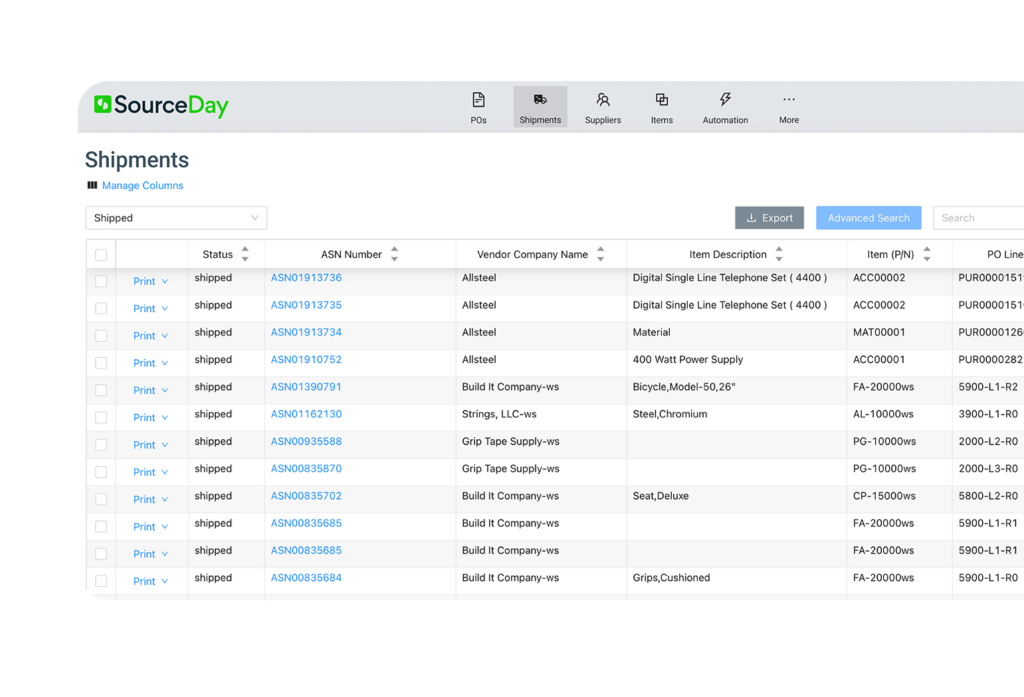
SourceDay connects supplier ASNs with purchase orders from your ERP so procurement, operations, and receiving get inbound visibility and understand supply risk all without changing tools or workflows.
From box numbers to what’s actually in the box. Inbound visibility you can trust.
Request a Demo
SourceDay is a verified leader
Capterra rating
4.7
G2 rating
4.5
Direct quarterly Spend
$5B+
PO CHANGES YEARLY
100M+
Suppliers activated
100K
ERP Integrations
500+
Why Advanced Shipping Notices Still Leave Teams Guessing
Advanced Shipping Notices are supposed to create visibility. In reality, they often create false confidence.
ASNs arrive late—or not at all
Shipment details don’t tell you what’s actually in the box
Teams find out about problems after production is already at risk
Inventory grows because commitments can’t be trusted
When you can’t connect the dots, teams over-compensate with:
Excess safety stock
Expedited shipping
Daily status meetings and escalation chains
The problem isn’t lack of data. It’s that shipment data and purchase order data live in different systems and never fully connect.
Operational Confidence Relies on ASN Accuracy
SourceDay is not a control tower or planning system. It’s a quiet coordination layer that makes inbound supply predictable by validating supplier commitments before they become problems.
WHAT THIS MEANS FOR ASNs
- ASNs are tied directly to purchase orders
- Supplier confirmations are continuously validated
- Changes surface early—while there’s still time to act
- Operations teams can trust what’s coming, not just see it
The Outcomes Teams Actually Care About
From startups to industry leaders, we’ve helped companies transform and achieve exceptional results. Here’s what our partners have to say about working with us.
Predictable Supply → Lower Inventory
Manufacturers don’t carry excess inventory because they want to. They do it because supplier plans change, updates don’t flow back into the ERP, and teams are left chasing information to stay ahead.
SourceDay creates confidence in inbound materials by validating delivery promises before shipment—so teams can safely reduce buffer inventory without increasing risk.
Results include:
- Lower safety stock
- Less working capital tied up “just in case”
- Fewer last-minute expedites
On-Time Delivery Without Heroics
Late parts don’t start late—they drift silently.
SourceDay surfaces ASN and PO risk early enough to correct course before production is impacted. Teams stop relying on firefighting and escalation to hit delivery targets.
What this replaces:
- Manual chasing
- Daily status calls
- End-of-line surprises
OTIF improves—not because teams work harder, but because problems are visible sooner.
Efficiency Without Forcing Change
SourceDay works inside how manufacturing organizations already operate.
- ERP remains the system of record
- Suppliers participate via email, portal, or bulk upload
- No new chain of command
- No supplier retraining required
This won’t create political friction or expose teams. It quietly improves execution.
Built for Volatility
(Tariffs, Disruptions, Change)
Tariffs, geopolitical shifts, and supplier instability introduce constant change.
SourceDay helps teams quickly understand:
- Which ASNs are affected
- Which suppliers are at risk
- Which timelines need attention
All without restructuring teams or introducing new approval layers. Leaders stay informed. Operators stay empowered.
How SourceDay Supports Advanced Shipping Notices
SourceDay doesn’t replace ASNs—it makes them reliable.
- ASN data is tied directly to purchase orders
- Supplier commitments are confirmed and tracked continuously
- Changes are captured before shipments arrive
- Buyers and operations teams share one source of truth
This is inbound visibility you can trust, not just receive.
Why Teams Choose SourceDay
Over “Control Towers”
Confidence over complexity
SourceDay doesn’t promise to replace people or processes—it makes existing ones more reliable.
Change that feels safe
No supplier mandates. No ERP replacement. No internal risk exposure.
Manufacturing-first reality
Built for hierarchical, risk-averse organizations—not idealized workflows.
Outcomes finance cares about
Inventory reduction
Expedited shipping prevention
OTIF improvement
Working capital efficiency
Risk mitigation
Start Small.
Quietly. Safely.
- Works with your existing ERP
- Roll out by plant, supplier, or category
- No supplier retraining required
- Value without organizational disruption
You don’t need a transformation program to make supply predictable.
Frequently asked questions
Still have questions? We’re ready to talk to you.
What is an Advanced Shipping Notice (ASN)?
An Advanced Shipping Notice, or ASN, is a notification sent by a supplier before a shipment arrives. It typically includes shipment identifiers such as box or pallet numbers, carrier details, and expected delivery timing. ASNs are usually generated by a supplier’s transportation or logistics system.
What does ASN mean in receiving or in a warehouse?
In receiving or warehouse operations, an ASN lets teams know that a shipment is on the way. It helps prepare for inbound deliveries by providing advance notice of shipment timing and identifiers, though it may not always show which purchase order lines or parts are inside each box.
What is the difference between an ASN and a purchase order (PO)?
A purchase order is created by the buyer and defines what was ordered, including parts, quantities, and pricing. An ASN is created by the supplier and describes how items are being shipped, such as box numbers and delivery timing. The challenge is that ASNs and POs often live in different systems and are not automatically connected.
What is the purpose of an ASN?
The purpose of an ASN is to give buyers and receiving teams advance notice that a shipment is coming. ASNs help teams plan labor, space, and timing for inbound shipments, especially when shipment details are connected to the correct purchase orders and parts.
Who sends an ASN and who assigns ASN numbers?
ASNs are typically created and sent by suppliers using their transportation management system, warehouse system, or EDI process. The supplier or their logistics provider assigns the ASN number.
What does an ASN look like?
An ASN typically includes shipment identifiers such as box or pallet numbers, carrier information, expected delivery dates, and references to purchase orders or shipments. The exact format varies depending on the supplier’s logistics system or EDI process.
What is the difference between ASN and EDI?
ASN refers to the shipping notice itself. EDI refers to the method used to transmit it electronically. For example, an ASN is often sent using the EDI 856 transaction, but ASNs can also be shared through portals, emails, or other systems.
What is the ASN process and how does it work?
The ASN process begins when a supplier prepares a shipment and generates an Advanced Shipping Notice from their logistics or transportation system. The ASN is sent to the buyer before the shipment arrives to provide advance notice of what is shipping and when.
The challenge is that ASN data and purchase order data often live in separate systems, which makes it hard to understand how shipments impact specific orders and parts.
How does ASN receiving work?
In ASN receiving, warehouse or receiving teams use the ASN to prepare for inbound shipments and validate deliveries when they arrive. This can include checking box or pallet numbers, expected quantities, and delivery timing.
ASN receiving works best when shipment details are connected to the correct purchase orders and parts, so teams know what they are receiving and why it matters.
How does ASN work in manufacturing?
In manufacturing, ASNs provide advance notice of inbound shipments so teams can plan receiving and production. When ASN data is connected to purchase orders, teams can see what parts are arriving, which orders they support, and whether any changes need attention before the shipment arrives.
What does ASN mean at large retailers?
At large retailers, an ASN refers to the advance shipping notice suppliers must send before a shipment arrives. These ASNs are used to schedule receiving and validate inbound shipments, often with strict accuracy requirements.
Does SourceDay generate Advanced Shipping Notices?
No. SourceDay does not generate ASNs and does not replace a transportation or logistics system. SourceDay connects ASNs created by supplier logistics systems to purchase orders in your ERP so teams can see what shipments are coming and which orders and parts they impact.
How is SourceDay different from ASN software or a TMS?
A TMS or ASN software typically focuses on transportation execution and shipment tracking. SourceDay focuses on connecting shipment data to purchase order data so teams know what is in each shipment and how it affects receiving, production, and inventory.
Can SourceDay help reduce excess inventory?
SourceDay does not optimize inventory levels directly. However, when teams know what shipments are coming and what orders and parts they impact, they can plan more accurately and reduce the need for excess safety stock and last-minute expediting.
What is SourceDay?
SourceDay is a supply coordination platform for manufacturers and distributors. It connects supplier shipment information, such as Advanced Shipping Notices, with purchase orders from your ERP so teams can see what shipments are coming and what orders and parts they impact. SourceDay works alongside existing ERP and logistics systems and does not replace them.
Who is SourceDay for?
SourceDay is used by procurement, operations, receiving, supply chain, and finance teams at manufacturers and distributors. Procurement teams often work directly in SourceDay, while operations and receiving teams typically see the same shipment and order information in the ERP they already use.