Procurement leaders spend a lot of time thinking about supplier strategy—diversification, contracts, and sourcing plans. Those things matter.
But most procurement risk doesn’t originate there.
It shows up later, in the day-to-day execution of purchase orders. A delivery date changes but never makes it back to the ERP. Pricing shifts quietly between confirmation and invoice. A supplier acknowledges an order by email, but the commitment never gets recorded.
Individually, these moments look small. Together, they create the operational uncertainty that procurement risk management is supposed to prevent.
The challenge isn’t a lack of strategy. It’s a lack of reliable visibility into what suppliers have actually committed to deliver.
Many organizations start addressing this gap by improving how they manage purchase order collaboration and updates between buyers and suppliers.
What Procurement Risk Management Looks Like in Practice
In theory, procurement risk management is about identifying and mitigating supplier risk. In practice, it’s about preventing the operational surprises that disrupt production plans, working capital, and customer commitments.
Teams usually encounter risk in a few recurring places:
- Unacknowledged purchase orders: A PO is sent to a supplier, but no confirmation comes back—or it comes back in email and never updates the ERP.
- Delivery date drift: Suppliers adjust delivery timing as conditions change, but those updates don’t always reach planning systems.
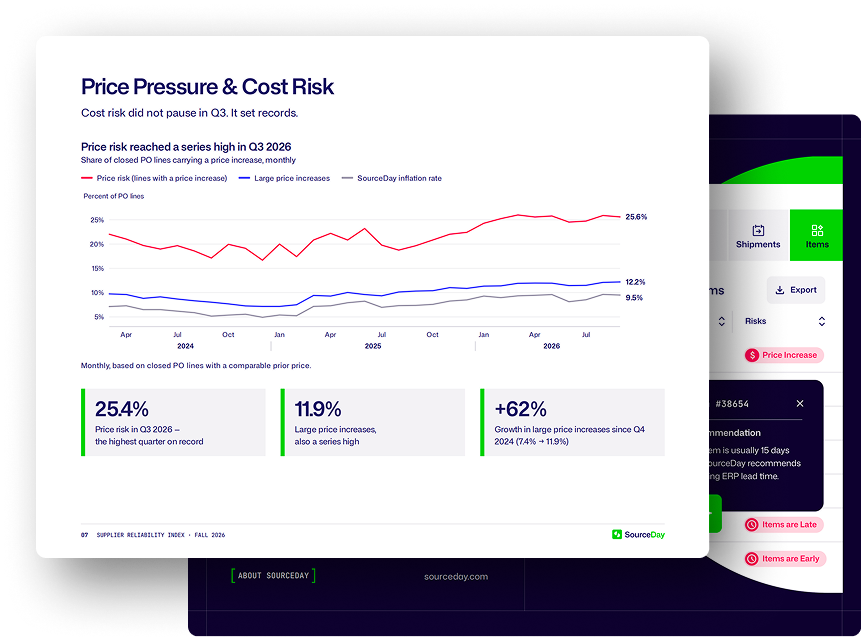
- Pricing discrepancies: Quoted pricing and confirmed pricing don’t match, creating unexpected purchase price variances.
- Communication gaps: Updates happen in inboxes, spreadsheets, or calls instead of structured systems.
None of these problems are unusual. Procurement teams are doing the best they can with the tools they have. But the result is the same: the ERP shows a plan that suppliers may no longer be able to meet.
Why Direct Procurement Risk Is Harder Than It Looks
Direct procurement is tightly connected to production schedules and customer delivery commitments. That means small changes propagate quickly across the business.
A single supplier adjustment can trigger:
- production delays
- expedited freight
- inventory buffers
- missed customer shipments
- margin erosion
Procurement risk management often focuses on supplier financial stability or geopolitical exposure. Those risks matter, but most operational disruptions happen much closer to home—inside the purchase order lifecycle.
The issue isn’t whether suppliers are reliable. It’s whether commitments stay visible and current as conditions change.
Where Traditional Procurement Risk Processes Break Down
Most organizations attempt to manage procurement risk through a combination of:
- supplier scorecards
- sourcing diversification
- contract controls
- manual follow-ups with suppliers
Those approaches address strategic risk. They struggle with execution risk.
Execution risk appears when:
- supplier commitments are scattered across email threads
- delivery updates happen outside the ERP
- buyers spend time chasing confirmations instead of analyzing risk
This creates a familiar pattern. The planning system assumes everything is on track. The real signal lives somewhere else.
Procurement risk management becomes reactive instead of controlled.
Procurement Risk Management Starts With Supplier Commitments
Reducing procurement risk doesn’t start with more reporting. It starts with ensuring that supplier commitments stay visible and current.
When purchase order confirmations, delivery updates, and pricing changes are captured in one place, teams can see risk early—before it reaches production.
That visibility changes how procurement operates:
- buyers spend less time chasing updates
- planners trust the data in the ERP
- supplier conversations focus on resolving issues instead of locating them
The goal isn’t perfection. It’s predictability.
Organizations that improve procurement risk management typically begin by ensuring purchase order updates flow cleanly between suppliers and the ERP so planning systems reflect current supplier commitments.
Why Visibility Into Purchase Orders Matters
Most procurement execution still happens through email. Buyers send POs from the ERP. Suppliers respond in their own systems or by email. Updates get copied, forwarded, or entered manually.
Over time, the ERP becomes a snapshot of what was planned—not what suppliers have actually committed to deliver.
That’s where procurement risk management tends to fail.
When supplier commitments stay synchronized with the ERP, planning systems operate on reliable data. When they don’t, organizations operate on assumptions.
Many teams address this by introducing a structured collaboration layer between buyers, suppliers, and the ERP so confirmations, delivery changes, and price updates remain aligned with operational systems.
A Practical First Step in Reducing Procurement Risk
Most organizations don’t need a massive transformation to improve procurement risk management.
A practical starting point is stabilizing open purchase orders.
That means:
- Capturing supplier confirmations
- Tracking delivery changes
- Ensuring updates flow back into the ERP
Once open orders are reliable, teams gain the visibility needed to identify risk earlier.
From there, automation and supplier workflows can expand.
Many organizations take this approach by first focusing on stabilizing open purchase orders and supplier commitments before expanding automation across procurement workflows.
Procurement Risk Management Is Ultimately About Predictability
Procurement teams operate in an environment where change is constant. Suppliers adjust schedules, transportation shifts, and demand moves.
Risk doesn’t come from those changes alone. It comes from discovering them too late.
Procurement risk management becomes far more effective when supplier commitments stay aligned with the systems companies use to plan production, inventory, and delivery.
When that alignment exists, teams spend less time reacting to surprises—and more time making informed decisions.
Next Step
If procurement risk management is becoming harder to maintain as your supplier network grows, the next step is often improving how purchase order commitments are captured and maintained.You can talk with a SourceDay expert about stabilizing open purchase orders and supplier commitments here.