Supplier risk rarely appears as a single event.
More often it builds slowly: a delivery date moves, a commit date changes, a supplier struggles with capacity, or pricing adjustments appear without warning. Each issue on its own may seem manageable. Together, they introduce uncertainty into production planning.
A structured supplier risk management process helps manufacturers identify those signals early and respond before disruptions affect operations.
This guide explains:
- what supplier risk means in practice
- the most common types of supplier risk
- how to conduct a supplier risk assessment step-by-step
- how teams use risk matrices and frameworks to prioritize action
What Is Supplier Risk?
Supplier risk is the possibility that a supplier will fail to meet commitments in ways that disrupt production, increase costs, or delay customer shipments.
In manufacturing environments, supplier risk typically shows up through operational signals such as:
- late or inconsistent deliveries
- changing commit dates
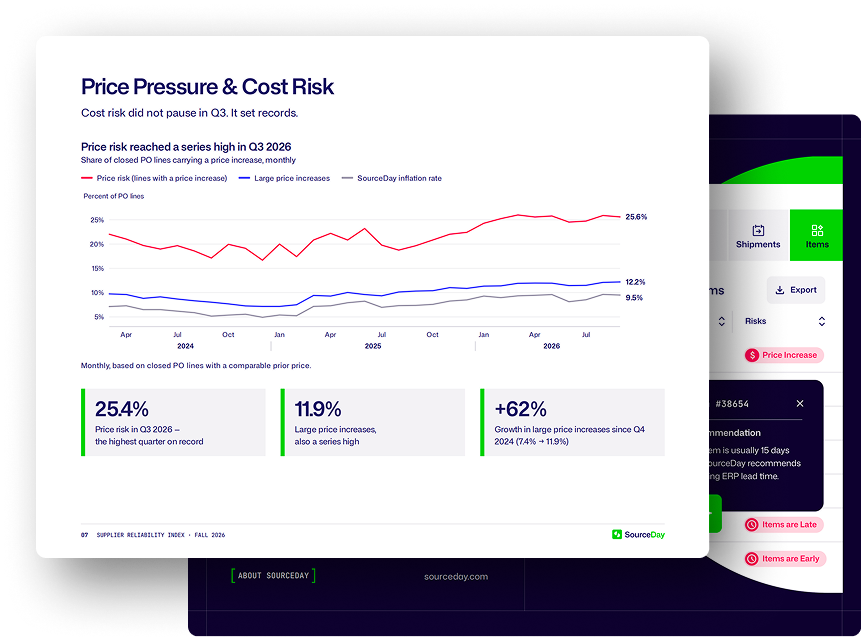
- unexpected pricing changes
- quality issues requiring rework
- supply shortages or capacity constraints
Many organizations think of supplier risk primarily in financial or geopolitical terms. Those risks matter, but day-to-day execution problems often create the biggest operational impact.
When supplier commitments drift away from what planning systems expect, production schedules become harder to trust.
Why Supplier Risk Is Harder to Manage Than It Looks
Supplier risk often persists not because teams ignore it, but because visibility breaks down across systems and communication channels.
Common challenges include:
- Fragmented communication with suppliers: Updates arrive through email threads, spreadsheets, and calls. Delivery commitments change, but the information does not always reach planners or operations teams.
- Limited visibility into supplier performance: Procurement teams may track delivery performance, but inconsistent monitoring makes it difficult to identify patterns across suppliers. Organizations improving supplier accountability often start by strengthening supplier performance visibility and scorecards.
- Supplier concentration risk: When a critical component relies on a single supplier or small group of suppliers, disruptions can have immediate operational impact.
- Constant operational change: Lead times, pricing, and capacity shift frequently. Without continuous monitoring, teams often recognize risk only after production plans are affected.
Common Types of Supplier Risk
Most supplier risk assessments evaluate suppliers across several categories.
Understanding these categories helps teams identify where exposure may exist across their supplier base.
- Financial Risk: Financial instability can affect a supplier’s ability to maintain operations or invest in production capacity. A supplier financial risk assessment helps procurement teams understand whether suppliers can support long-term demand. Indicators may include:
- declining financial performance
- ownership changes
- reduced investment in manufacturing capability
- Operational Risk: Operational risk appears when suppliers struggle to meet day-to-day commitments. Operational signals often appear first in purchase order communication and delivery commitments. Common indicators include:
- repeated late deliveries
- inconsistent lead times
- order quantity changes
- quality issues affecting production
- Geographic or Geopolitical Risk: These risks can affect multiple suppliers simultaneously. Location-based risks include:
- transportation disruptions
- regional instability
- trade restrictions
- environmental events
- Supplier Dependency Risk: Many organizations identify dependency risk during supplier risk assessments and use it to prioritize supplier diversification. Supplier dependency risk increases when an organization relies heavily on a single supplier for critical components. Dependency risk grows when:
- few alternative suppliers exist
- switching suppliers requires long qualification cycles
- components are highly specialized
- Supplier Performance Risk: Supplier performance risk reflects how reliably suppliers meet commitments over time. Improving performance visibility is often the first step toward reducing this type of risk. Patterns such as these often signal operational issues that may escalate if not addressed:
- missed acknowledgements
- late deliveries
- inconsistent delivery updates
What Makes a Supplier High Risk?
Not every supplier issue represents meaningful risk. Most procurement teams focus attention on suppliers that show consistent signals across several areas.
A supplier may be considered high risk when multiple factors appear at the same time, such as:
- repeated late deliveries
- volatile lead times
- heavy reliance on a single supplier
- financial instability
- limited transparency around delivery commitments
High-risk suppliers are not necessarily failing suppliers. Many simply operate in environments where capacity or supply conditions are changing quickly.
The goal of supplier risk management is not to eliminate all risk, but to identify where attention and mitigation planning are needed.
The 5-Step Supplier Risk Management Process
A structured supplier risk management process helps teams evaluate supplier reliability consistently.
- Identify Critical Suppliers: Start by identifying suppliers with the greatest operational impact. Focusing first on critical suppliers ensures risk assessment efforts target the areas with the greatest potential disruption. These may include suppliers that:
- provide critical components
- support high-revenue products
- have long lead times
- have limited alternative sources
- Define Supplier Risk Categories: Next, define the categories used to evaluate suppliers. Using consistent categories ensures suppliers are evaluated fairly across the supplier base. Many organizations evaluate risk across areas such as:
- financial stability
- operational performance
- geographic exposure
- supplier dependency
- compliance or regulatory exposure
- Score Supplier Risk: Each supplier can then be evaluated using a simple scoring system. Scores do not need to be complex. The goal is to identify patterns and prioritize attention across suppliers. For example:
- Low risk
- Moderate risk
- High risk
- Build a Supplier Risk Assessment Matrix: A supplier risk matrix helps visualize where exposure exists. Most organizations evaluate suppliers across two dimensions. Suppliers that rank high in both areas typically require immediate monitoring or mitigation planning.
- Supplier criticality (business impact): How significant the supplier is to production.
- Risk likelihood (probability of disruption): How likely operational issues are to occur.
- Monitor Risk Continuously: Supplier risk changes over time. Financial conditions shift, demand fluctuates, and operational performance evolves. Effective supplier risk management frameworks therefore rely on continuous monitoring rather than one-time evaluation. Many organizations incorporate ongoing supplier monitoring into supplier performance management processes.
Supplier Risk Assessment Template (Simple Starting Framework)
Teams often begin with a basic supplier risk assessment template to standardize evaluations.
A simplified example might include:
| Supplier | Financial Risk | Operational Risk | Dependency Risk | Overall Risk |
| Supplier A | Medium | High | High | High |
| Supplier B | Low | Low | Medium | Medium |
This type of template allows procurement teams to quickly compare suppliers and identify where deeper analysis may be required.
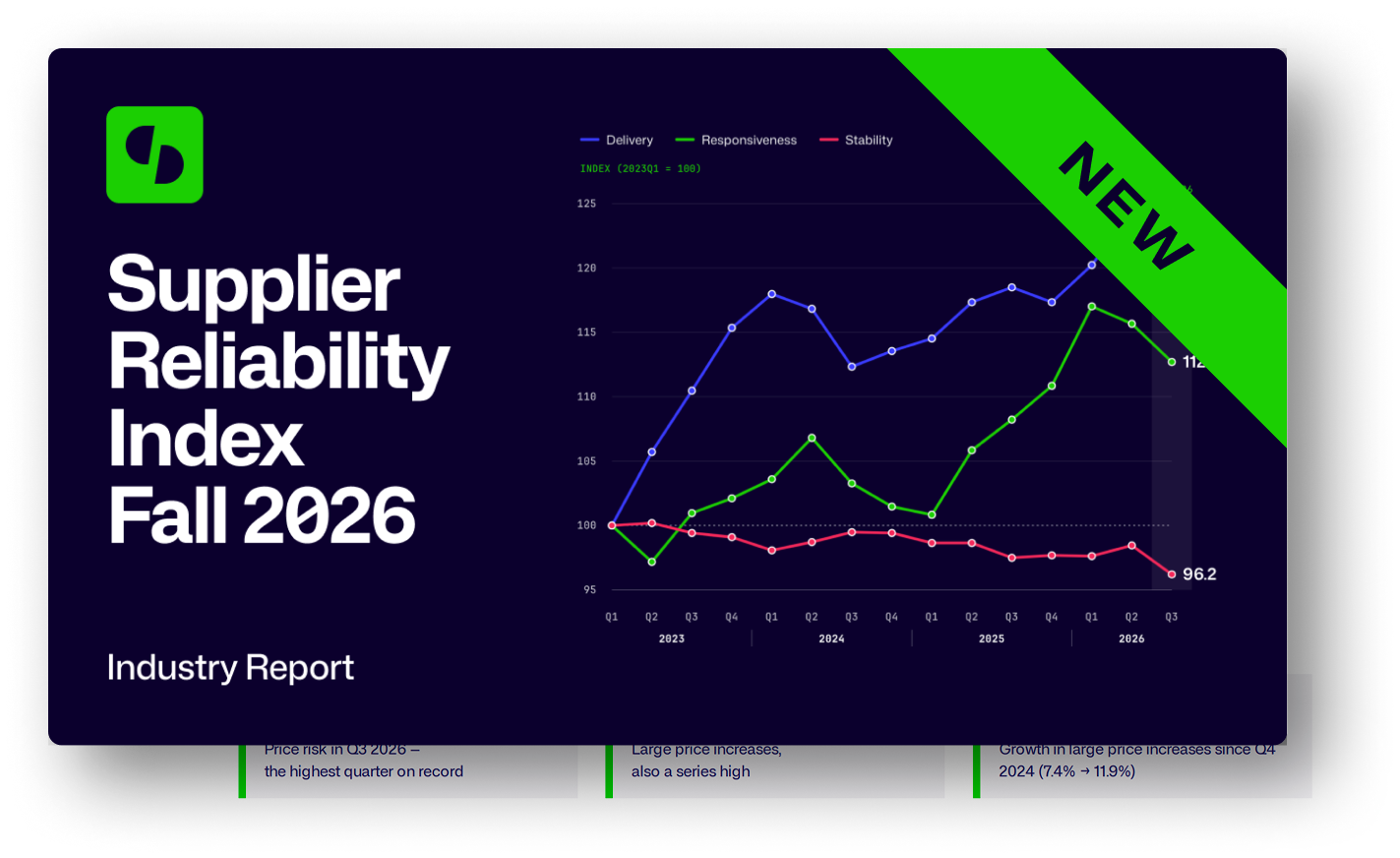
As supplier data improves, organizations often expand this framework with additional metrics such as delivery performance and supplier responsiveness.
Example: Identifying Risk in Practice
Supplier risk often becomes visible through operational signals rather than formal evaluations.
In one SourceDay customer example, a manufacturer began noticing a pattern: delivery commitments from several suppliers were shifting after purchase orders had already been placed.
Each change seemed minor at first. But when planners looked across open orders, they realized several components supporting the same product line had moved at the same time.
Without earlier visibility into those supplier changes, production schedules would have been disrupted.
By monitoring supplier commitments more closely, the team was able to identify potential issues earlier and adjust plans before the delays affected customers.
Stories like this are common across manufacturing organizations. Supplier risk rarely arrives as a single disruption—it appears through small signals that accumulate over time.
Turning Insights Into Action
Supplier risk assessments help organizations identify where exposure exists. The real value comes from acting on those insights early.
Manufacturers improving supplier reliability typically focus on three areas:
- improving visibility into supplier commitments
- monitoring supplier performance consistently
- addressing risks before they affect production schedules
Organizations that strengthen supplier execution visibility often see fewer surprises across their open purchase orders.
If supplier reliability and delivery commitments are difficult to track across your supplier base, the next step is understanding how stronger supplier performance visibility can improve predictability.